What Pop Culture Can Teach Us About Blockchain Adoption
What Pop Culture Can Teach Us About Blockchain Adoption
Sep 25, 2025 / By Ava Labs / 7 Minute Read
As trends cycle in and out of daily life, discerning impact remains top of mind as culture and capital connect
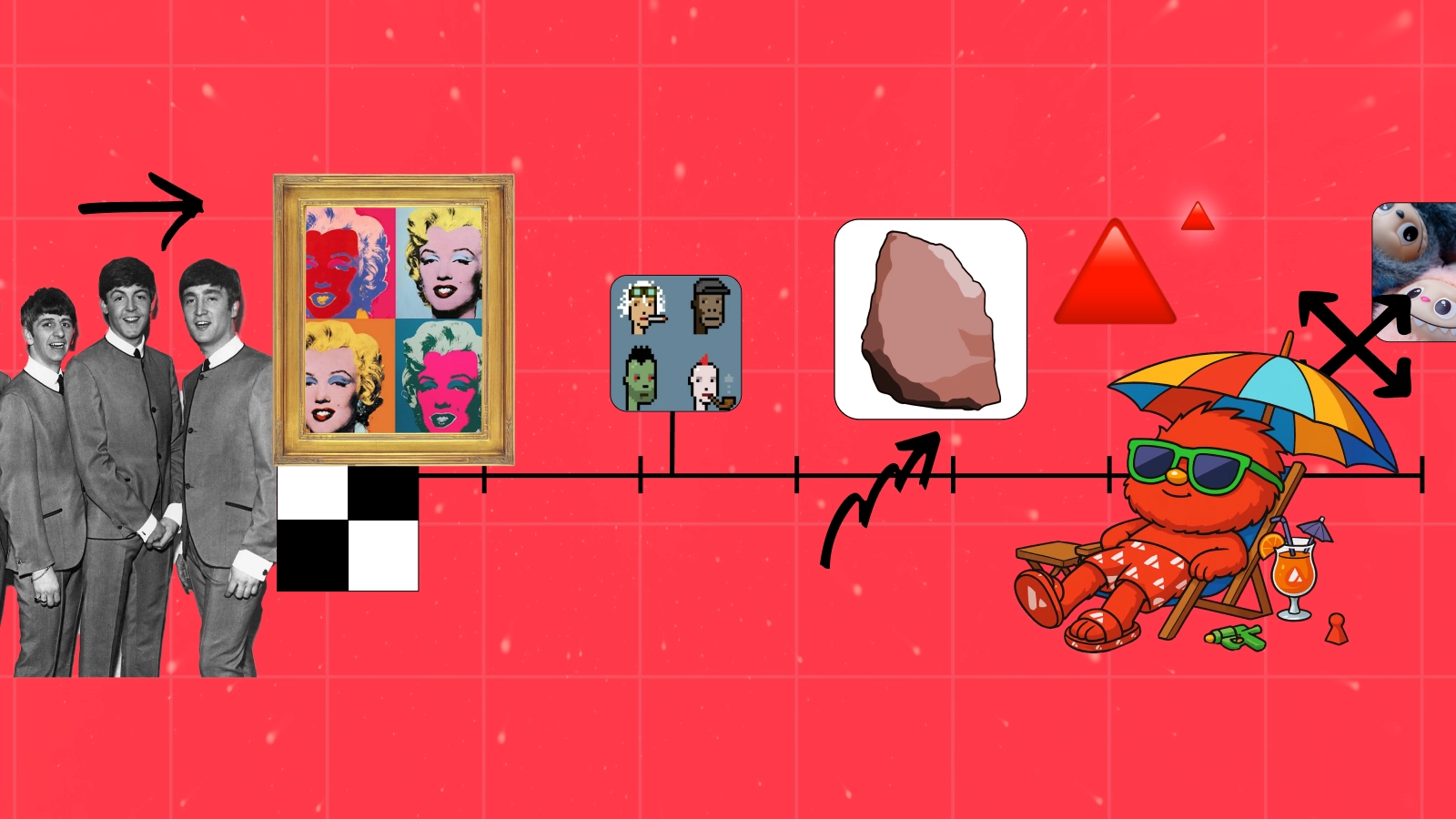
From the Baby Boomers’ bell-bottom jeans and Pet Rocks to Millennials’ Beanie Baby mania, each generation had its own version of what redefined ‘cool.’ But what made these trends catch on? Well, they celebrated the novel and captured the imagination of millions worldwide by sparking curiosity and social connection. In this study, we'll explore how trends have evolved in the digital age, and why the latest developments in blockchain are not mere fads, but here to stay.
It could be argued that trends now move even faster in our modern society with the internet and social media woven so closely together with our daily lives. Discerning between short-term trends and the arrival of a groundshifting technological advancement may help us zoom out to the evolution of trends and technology’s greater impact in shaping culture. It’s not certain, but it’s looking like there’s a good possibility blockchain will still be here long after society has seen the last Labubu doll (a franchise on track to do a billion dollars in sales this year).
Digital Culture is Trending
Since hitting mainstream conversation and culture with the 2009 launch of Bitcoin, the crypto and blockchain landscape has been no stranger to hype-driven trends. In 2017, Initial Coin Offerings (ICOs) were the hottest opportunity on every investor/speculator's minds. Projects were valued in the billions, often on the back of nothing more than a slick pitch and vaporware.
Jumping forward to the 2020 covid era, NFTs were the talk of the town. Beeple’s Everydays NFT sold for a staggering $69 million, while Justin Bieber adopted a Bored Ape, valued at a cool $1.2 million. Where cynics saw overpriced, basic digital cartoons, others saw status symbols offering exclusive access to special clubs, parties, and VIP experiences exponentially shifting the cultural lens on digital value.
By 2021, Mark Zuckerberg’s Meta, (or maybe just his CGI twin. You decide) introduced plans for a new digital world: the Metaverse. Users in the Metaverse create digital avatars in order to explore mixed-reality worlds. In this digital realm, participants could buy and sell assets, including real estate and wearables from luxury brands such as Gucci. Enthusiasts speculated that these crypto tokens would underpin a new digital economy, turning virtual fashion and land speculation into real financial markets.
It seemed like the end of 2021 was an inflection point for blockchain. Onchain digital assets were entering mainstream conversation with NFTs, and Meta was building a digital world in which you could interact with others, create digital content, and explore virtual worlds. However, the records show that interest in NFTs and the Metaverse started to wane at the beginning of 2022.
It turns out for most people, they just weren’t ready to live their life in a big-tech curated digital reality. People are, however, open to adopting elements of blockchain for purposes that make sense. This 2024 survey reveals widespread concern about data privacy, online value creation, trust in finance, and AI-generated content. There is also notable distrust in the current financial system and the influence of big tech. Crucially, respondents believe blockchain could help solve these issues.
Enter: Blockchain Adoption
The underlying potential of blockchain was one of the main reasons the hype was around ICOs and NFTs (and the Metaverse to an extent). While these ICO and NFT hype trends came and went, the builders never stopped building. The core idea behind blockchain (the use of decentralized networks tracking a shared database) still makes a lot of sense when deployed in the right context.
ICOs also reflected everyday investors’ desire for access to opportunities that had long been reserved for Wall Street insiders. NFTs offered a way to claim ownership in a digital age, whether through art, collectibles, or identity. The Metaverse, meanwhile, gained traction during Covid lockdowns, when people were searching for connection and community. In countries facing high inflation or political instability, blockchain and cryptocurrency emerged as alternatives to fragile banking systems.
That’s why, when blockchain can provide secure, 24/7 access to financial products unavailable through high-street banks, it can make sense. And when people in inflationary economies can gain access to assets backed 1:1 with the U.S. dollar, it can make sense.
Real World Assets Go Online
In 2025, one of the most powerful emerging trends in blockchain is the tokenization of real-world assets (RWAs). Mogul, a fractional real estate investing platform, is turning real estate investment on its head. Built on Avalanche, mogul lets investors own a stake in tangible, income-generating properties with fractional shares in real estate. Institutions have also been making moves to get RWAs on-chain. Avalanche has seen the likes of SkyBridge Capital announce plans to tokenize $300 million from two of its funds on the network. This move could speed up transaction times, and also potentially enable a reduction in transfer fees due to fewer intermediaries required to process transactions on a blockchain network.
It’s not just DeFi and on-chain RWAs where blockchain offers real solutions to existing problems. Across the Avalanche Network, it’s possible to see the emergence of new applications shaping how people connect to culture, as well as capital.
Connecting Capital to Culture
Music, film, sports. All these aspects of culture are represented and supported in the Avalanche ecosystem. Platforms like EVEN offer artists a direct-to-fan business model, giving fans access to pre-releases and exclusive content. The artists also decide exactly how they want to reward fans. In a big shift away from the models of traditional streaming platforms, EVEN lets artists set the price to access their work.
The world of sporting fandom is also seeing franchises leverage blockchain. Uptop, powered by Avalanche, offers fans new ways to connect with their favorite teams. Whenever a fan shops at an eligible store, they automatically earn reward points. Fans then redeem these points for tickets, merchandise, experiences, and more. In turn, Uptop enables sports teams to turn fan loyalty into an asset by selling branded points to partner businesses (such as grocery stores, quick-service restaurants (QSRs), and gas stations). Teams including the Cleveland Cavaliers, Detroit Pistons, and Louisiana State University have already announced partnerships with Uptop.
Together, these approaches signal a shifting trend in how access is defined in culture. Web2 brought user-generated content but little true ownership. Blockchain offers creators and fans a new way to build direct connections, with ownership baked in.
What Trends Have Taught Us
Trends, whether bell-bottom jeans or Bored Apes on the blockchain, have the potential to shape discourse and unite people with common interests. However, when it comes to understanding trends, there’s one important throughline: Utility outruns hype. The NFT boom of 2021 illustrates this dynamic perfectly. At its peak, the hype drowned out any clear signals of utility. But in 2025, NFTs have matured beyond collectible images and found footing in more practical applications. They’re being used for ticketing (to verify entry and reduce fraud at concerts, sporting events, and conferences), for record keeping (like supply chain tracking, certification, and identity credentials), and as a framework for loyalty programs (brands offering NFT-based rewards that double as membership passes). Even in real estate and finance, NFTs are being tested as a way to represent ownership of contracts and physical assets.
As new technology emerges in the blockchain space, there may be times the noise can drown out the signal of real applications. However, as we’ve seen with NFTs, just because a signal fades, it doesn’t necessarily mean we should turn our backs on the tech. Trends remind us that new innovations rarely arrive fully formed—well, except Pet Rocks.